

OpenMolcas returns to Valencia twenty years after its first workshop
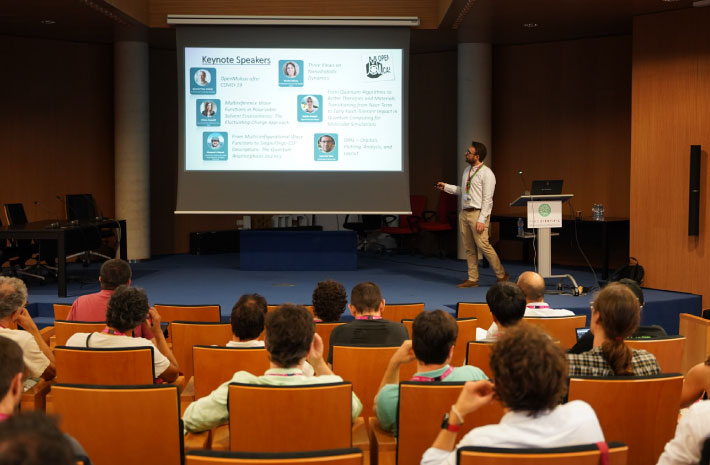
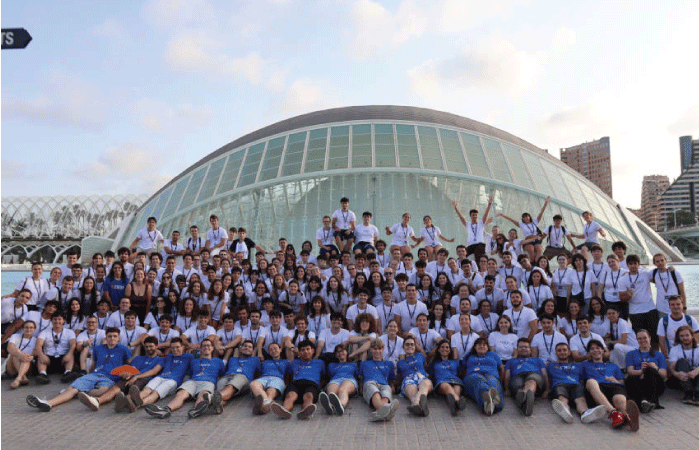
The 14th OpenMolcas Developers’ Workshop opened on Monday, 5 October, at the Institute for Molecular Science (ICMol) of the University of Valencia, bringing together developers and international users of this quantum chemistry software. The meeting returns to Valencia twenty years after the first Molcas Training Workshop was held in the city in 2006, to discuss new methods and tools in computational chemistry and the future development of the project.
In 2006, Valencia hosted the first Molcas Training Workshop. Twenty years later, the scientific community that develops and uses the software is gathering once again in the city, this time around OpenMolcas, its evolution as an open-source project.
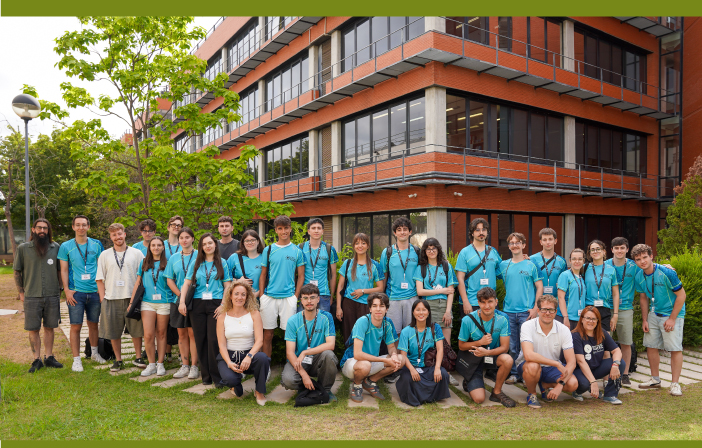
The 14th OpenMolcas Developers’ Workshop, which opened on Monday, 5 October, at the Institute for Molecular Science (ICMol) of the University of Valencia on the Burjassot Campus, will run until Wednesday, 7 October. The international meeting is dedicated to sharing new methodologies, technical developments and future perspectives in computational chemistry.
The event connects two moments in the same scientific story. Molcas has a history dating back to the late 1980s and, decades later, a significant part of its code moved to an open-source model, leading to the development of OpenMolcas. Since then, the project has continued to incorporate methods, interfaces and tools through the collaboration of an international scientific community.
New tools for understanding complex molecular systems
OpenMolcas is quantum chemistry software particularly oriented towards multiconfigurational methods, which are needed to describe electronic-structure problems for which simpler approaches may prove insufficient.
The scientific programme of the meeting reflects the wide range of problems currently being studied with these tools. Sessions will address new algorithms and electronic-structure methods, non-adiabatic dynamics and photochemical processes, spectroscopy, the interaction of molecules with their environment, and the simulation of excited states.
The work being presented includes new approaches to studying how external fields can modify photochemical processes; simulations of light-activated mechanisms related to rare DNA alterations; methods for studying molecular systems in solution; and tools for analysing ultrafast processes and complex electronic states.
The development of OpenMolcas itself is also a central part of the workshop. The programme addresses the modernisation and restructuring of the software, as well as new interfaces, algorithms and tools designed to extend its capabilities and facilitate both calculations and the analysis of their results.
Artificial intelligence, GPUs and quantum computing
The meeting will also provide an opportunity to discuss some of the transformations that are beginning to reshape scientific computing.
The programme includes contributions on quantum computing algorithms applied to molecular simulations, the potential use of artificial intelligence agents in scientific software development, and the use of graphics processing units (GPUs) to accelerate certain calculations.
These approaches are at different stages of development and are among the topics the community will discuss during the workshop, alongside the methodological and computational challenges that may shape the future evolution of OpenMolcas.
An international community returns to Valencia
The programme features six keynote lectures by Ignacio Fernández-Galván, TU Dortmund University; Chiara Cappelli, Scuola Normale Superiore; Giovanni Li Manni, Max Planck Institute for Solid State Research; Sandra Gómez, Universidad Autónoma de Madrid; Luca De Vico, Università di Siena; and Stefan Knecht, Algorithmiq.
The programme also includes scientific talks, short presentations, a poster session and a final round-table discussion on the future of the project, encouraging exchange between those who develop OpenMolcas and those who use it in their research.
The opening session began with remarks by Eugenio Coronado, Director of the Institute for Molecular Science (ICMol), and Daniel Roca Sanjuán, coordinator of the Quantum Chemistry of the Excited State (QCEXVAL) research group, which is leading the local organisation of the meeting.
Tribute to Luis Serrano Andrés
The opening session also included a tribute to Luis Serrano Andrés, Professor of Physical Chemistry at the University of Valencia and researcher at ICMol, who passed away in 2010 and whose career was closely linked to quantum chemistry, QCEXVAL, and the development and teaching of Molcas.
During the tribute, Valera Veryazov, a researcher at Lund University and a collaborator of Serrano Andrés within Molcas, recalled some of his contributions to the project and, in particular, his role in training new users. Serrano Andrés developed educational materials and tutorials designed not simply to teach users how to operate the software, but also to show how quantum chemistry could be used to address chemical problems.
This educational dimension is directly connected to the history commemorated by this year’s meeting. Luis Serrano Andrés organised the first Molcas Training Workshop in Valencia in 2006, launching a series of community meetings that subsequently continued in other countries and that, twenty years later, have returned to Valencia with OpenMolcas.
Veryazov also recalled a piece of advice that Serrano Andrés repeatedly gave his students and that remained in the memories of those who took part in those workshops: “Always, always, always check your active space”, referring to a fundamental aspect of the multiconfigurational methods used in quantum chemistry.
Organised from ICMol–University of Valencia
The local organisation of the meeting is led from the Institute for Molecular Science of the University of Valencia by the Quantum Chemistry of the Excited State (QCEXVAL) research group, coordinated by Daniel Roca Sanjuán, whose research focuses on theoretical and computational photochemistry. The workshop’s scientific committee also brings together specialists from universities and research centres across Europe.
ICMol’s involvement also extends to the scientific programme. Jesús Cerdá, Assistant Professor and researcher at ICMol–University of Valencia, will present DRAGON@OpenMolcas: A New Interface for Diabatization of Excited States in Molecular Aggregates, a new interface for the diabatization of excited states in molecular aggregates.
By hosting the workshop, ICMol brings together an international community closely involved in the development of advanced tools for theoretical and computational chemistry.
From Valencia 2006 to Valencia 2026
The workshop’s return to Valencia takes on particular significance when viewed from the perspective of these two decades.
Valencia hosted the first Molcas Training Workshop in 2006. Since then, computational capabilities, available methods and the way scientific software itself is developed have all evolved. The transition towards OpenMolcas also introduced an open and collaborative model in which researchers from different institutions can contribute to the development of the platform.
Twenty years later, the community has returned to Valencia to present its latest developments and, at the same time, consider what should come next.
Valencia 2006 and Valencia 2026 thus mark two moments in the same story: the evolution of Molcas into OpenMolcas and, with it, the changes experienced by multiconfigurational computational chemistry and the tools used to study molecular behaviour.
More information: 14th OpenMolcas Developers’ Workshop, University of Valencia.
.jpg)