
ICMol researcher Samuel Mañas-Valero wins the 10th Olivier Kahn International Award
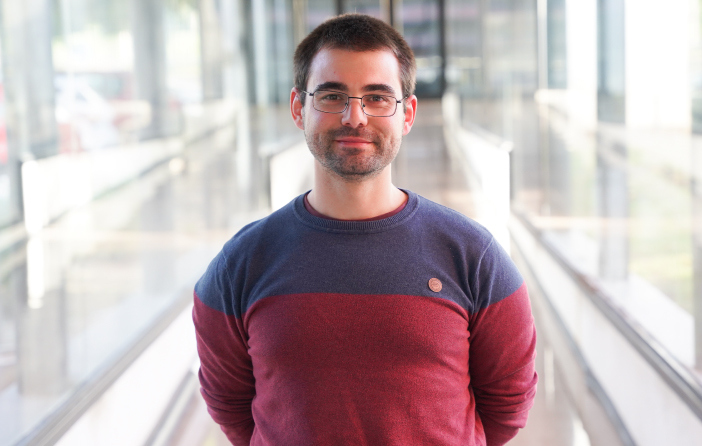
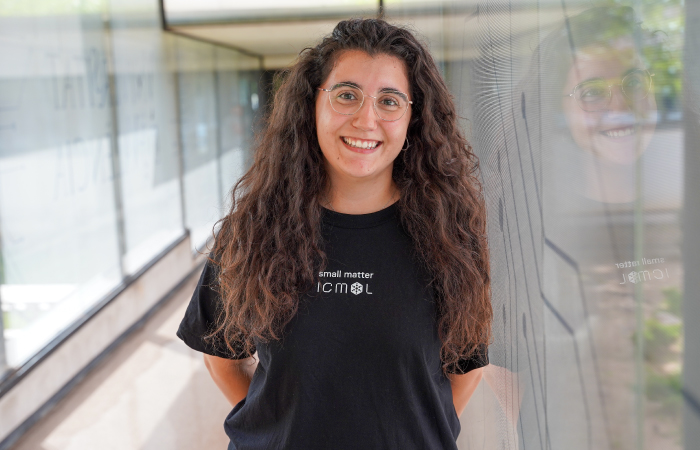
The European Institute of Molecular Magnetism and the members of the Olivier Kahn Award International Jury are pleased to announce that the laureate of the tenth Olivier Kahn International Award is: Dr. Samuel Mañas-Valero, Ramón y Cajal Research Fellow at the Institute of Molecular Science (ICMol) of the University of Valencia (Spain), in the Research Team Molecular Materials.
Olivier Kahn was a pioneer in molecular magnetism, a brilliant scientist and teacher, deeply committed to the promotion of talented young scientists. The European Institute of Molecular Magnetism follows the tradition of the MAGMANet European Network of Excellence that created, along with a proposition of Dante Gatteschi, a prestigious award, the Olivier Kahn International Award, to honour a young scientist who has received his/her PhD within the last 10 years. The award, an “Olivier Kahn Medal”, designed by “La Monnaie de Paris”, is accompanied by a prize of 3000 Euros, to help the laureate in his research.
The 2026 laureate, Dr Samuel Mañas-Valero, is an experimental physicist, who is pioneering the crossover between molecular magnetism and two-dimensional (2D) magnetic materials, and van der Waals heterostructures of a few or single atomic-size layers.
Searching for exotic new states of matter at the boundary of chemistry and physics, Samuel Mañas-Valero has opened several research directions that collectively reshaped the approach to molecular systems in the two-dimensional limit and expanded the field of molecular magnetism. The laureate combines the technical versatility of a materials physicist, the conceptual independence of a theorist, and the infrastructure-building ambition of an established Principal Investigator.
Samuel Mañas-Valero earned his PhD at the Institute of Molecular Science (ICMol) in Valencia and then performed post-doctoral stays in the Netherlands (Technical Uinversity Delft) before returning to Spain. At each step, he built new instrumentation and facilities, brought new ideas and clever projects, and achieved remarkable results. He stands out as an exceptionally high-impact early-career researcher.
At ICMol, Samuel Mañas-Valero first demonstrated a remarkable capacity for experimental physics by establishing a facility to explore under an inert atmosphere the electronic and magnetic properties of 2D molecular and hybrid materials, from crystal growth and mechanical exfoliation to nanodevice fabrication and magneto-transport measurements at low temperature. Among many results on two-dimensional layered devices exhibiting novel conductive and switching properties, one can highlight:
- the first isolation of 2D molecule-based van der Waals magnets with two-dimensional magnetic coordination polymers or metal-organic frameworks;
- the fabrication of the first switchable van der Waals heterostructures interfacing spincrossover layers with 2D materials, tunable by external stimuli;
- the use of large-angle twist engineering as a tool to control magnetic and optical anisotropy in 2D vdW systems;
- the multistep magnetization switching in orthogonally twisted ferromagnetic monolayers.
These achievements have a profound impact on the growing community of two-dimensional physics and open new prospects in 2D molecular magnetism.
Recently, the laureate moved from static magnetism to the investigation of spin dynamics and spin waves Hz developed colour centre magnetometry as a promising tool to use quantum sensors for imaging spin waves and for advancing spin-wave technologies (magnon spintronics).
The future plans of Samuel Mañas-Valero in Valencia are to explore new perspectives in molecular quantum technologies, by launching a new experimental research line focused on spin dynamics (magnons) in low-dimensional magnets, “molecular magnonics”. The project foresees the incorporation of functional molecules onto magnetic layers, or twisting these magnetic layers to tune the magnon dispersion (imaging and large-angle twisting). Other challenges rely on the strong coupling of van der Waals magnons with molecular spin qubits, expected to provide quantum devices (magnonic cavities), or on the exploitation of spin defects (molecular colour centres) to perform quantum sensing.
Presenting the social importance of his work, Samuel Mañas-Valero writes:
"My research focuses on understanding and creating new artificial magnetic materials at the smallest possible scale by stacking and twisting different two-dimensional (2D) magnetic layers.[…] They open the door to faster, smaller, and more energy-efficient electronic and spintronic devices. Improving how information is stored and processed can help to reduce the growing energy consumption of digital technologies […] contributing to a more efficient and sustainable future."
The international jury selected the laureate among a group of outstanding young scientists, ladies and gentlemen, who have actively contributed to the development of different areas of molecular magnetism in Europe and have provided the international community with remarkable scientific results since their PhD thesis, less than 10 years ago.
The members of the jury were impressed by the mobility and the very high standard of all the candidates. They are pleased that all the candidates have stable professional positions and are leading their own research lines.
They wish the laureate and the candidates complete success in the development of their remarkable and challenging projects.
The Award was presented on August 17 during the European Conference on Molecular Magnetism (ECMM 2026), held in Copenhagen, Denmark.
The laureate will present an invited lecture on this occasion.
The European Institute of Molecular Magnetism (EIMM)
The members of the 2026 Olivier Kahn International Jury:
Michel Verdaguer, President, Emeritus Professor, Institut Parisien de Chimie Moléculaire, CNRS, Sorbonne Université, Paris, France
Anne-Laure Barra, CNRS Research Director, National High Magnetic Field Laboratory (LNCMI, CNRS), Grenoble, France
Nicholas F. Chilton, Professor of Chemistry, Research School of Chemistry, The Australian National University, Canberra, Australia
Jose Ignacio Pascual, Natxo, Ikerbasque Research Professor, CIC nanoGUNE, Donostia, San Sebastian, Spain
Birgit Weber, Professor for Inorganic Chemistry, Faculty of Chemistry and Earth Science, Friedrich-Schiller-University Jena, Germany
Andrea Caneschi, Secretary, Professor, Laboratory of Molecular Magnetism (LaMM), University degli studi di Firenze, Florence, Italy
More info: https://www.eimm.eu/news.php
.jpg)